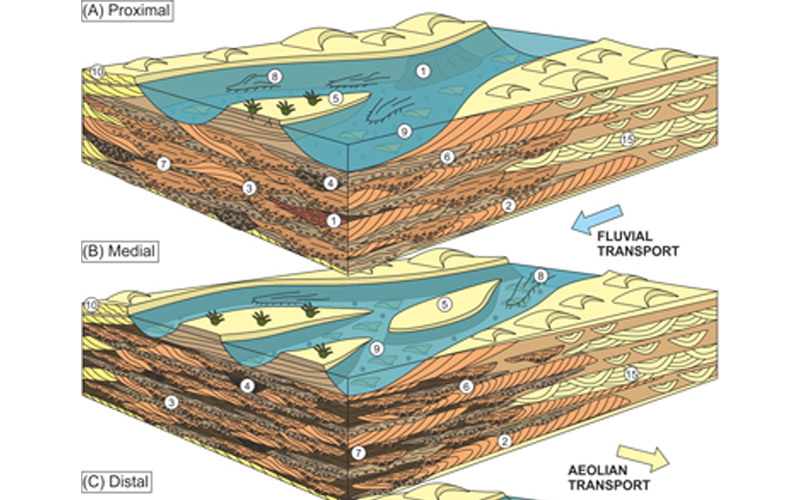
A seismic section on its own tells a story.
A geoseismic interpretation ensures that story is clearly understood.
In subsurface teams, the gap between technical insight and commercial decision-making is often not geological — it is communicational. Seismic interpretation software is designed for interpreters, but its native outputs are rarely optimised for explaining structure, stratigraphy, and petroleum systems to a broader technical or non-technical audience.
Geoseismic interpretation bridges that gap by combining seismic data with interpreted horizons, faults, stratigraphy, and geological context into a single, coherent visual narrative.
Why Attention and Clarity Matter in Subsurface Reviews
Decision-making environments are constrained by time. Portfolio reviews, technical assurance meetings, investment discussions, and partner updates typically involve multiple disciplines, competing objectives, and limited attention.
Research in cognitive psychology and human-computer interaction consistently demonstrates that:
- The brain processes visual information faster than text
- First impressions of visual material form extremely quickly
- Reducing cognitive load improves comprehension and retention
In practical terms, this means that geological figures often have only seconds to communicate their core message. If a seismic image or slide requires extensive verbal explanation to be understood, the geological signal risks being diluted — regardless of its technical quality.
Well-designed geoseismic graphics use visual hierarchy, contrast, and simplification to guide the viewer’s attention. This allows structural relationships, stratigraphic architecture, and trapping concepts to be grasped quickly and accurately.
The Underestimated Skills Gap in Geoseismic Communication
Many subsurface teams produce technically robust interpretations but lack dedicated capability in geoseismic visual communication. As a result, seismic information is often shared as uncluttered screenshots or over-annotated figures that struggle to convey a clear narrative.
When interpretation is not communicated effectively:
- Geological uncertainty can appear exaggerated
- Prospect stories lose momentum during reviews
- Key risks and controls are not clearly differentiated
- Decisions are delayed or deferred
This is rarely a failure of interpretation. More often, it reflects the absence of specialist skills in transforming subsurface data into decision-ready visuals.
Clear geoseismic sections help ensure that good geology is recognised as such — supporting confident, timely decisions and improving alignment between technical and commercial stakeholders.
Geoseismic Interpretation as a Decision-Support Tool
Geoseismic interpretation is not simply about aesthetics. It is a decision-support discipline.
By integrating:
- seismic reflectivity
- structural interpretation
- stratigraphic context
- petroleum system elements
into a single visual framework, geoseismic graphics improve understanding across teams and reduce the risk of miscommunication. This clarity becomes especially important when decisions involve capital allocation, well placement, or portfolio ranking.
Strong subsurface graphics cannot compensate for weak geology — but weak communication can easily obscure strong geology.
How Define Geographics Helps Improve Subsurface Communication
At Define Geographics, our work focuses on improving how geology is communicated — not changing the geology itself. We help teams transform seismic interpretations, geological concepts, and subsurface models into clear, professional visuals that stand up in technical reviews, internal decision forums, and external communications.
Our aim is to help subsurface insights travel further within organisations, ensuring that interpretation quality is matched by communication quality.
You can follow our work and examples on LinkedIn:
👉 https://www.linkedin.com/company/define-geo-graphics
Want to Improve Your Geoseismic Communication?
If you have seismic data, interpretations, or geological models that would benefit from clearer storytelling, we’d be happy to help.
👉 https://www.definegeographics.com OR get in touch directly BY CLIKCING HERE
If you’d prefer to build these skills internally, our training course covers the principles, workflows, and design thinking required to produce professional geoseismic graphics in-house.
👉 https://definegeographics.com/course
The seismic data shown in the example accompanying this article were provided by the North Sea Transition Authority (NSTA) and other third-party sources and are used strictly for illustrative and educational purposes.